
Want to Launch Your Passive Income Business as a Side Hustle in the next 90 Days?
The Tools, Training, and Systems to Launch and Grow Your Solopreneur Business!
Grab our FREE: "Business Startup Checklist" So You Can Avoid Making The Same Mistakes We Made!
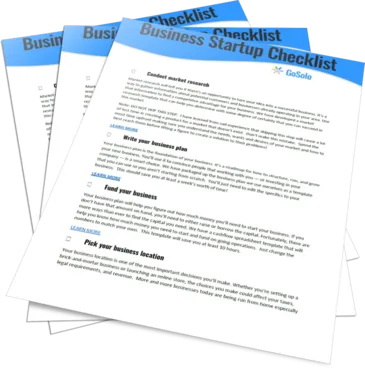
We'll Deliver Our Free "Business Startup Checklist" Immediately to Your Inbox
gosolo™ is committed to your privacy. We will occasionally send you free content and let you know about our offerings and you can unsubscribe at any time. We have never sold data and we never will. Your email address is safe with us.
Downloads To Help You Launch Your Solopreneur Business
These are just a few of the amazing solutions we have for solopreneurs, coaches, and consultants launching to a global market...

Business Plan Template
There has been a shift in branding in the last 10-15 years as personal brands have caught up with the importance of corporate branding. Building your personal brand has become more important than ever thanks to social media. If you want to stay relevant, then systematically organizing everything you do to build your personal brand will pay dividends in your bank account.

S-Corp Templates to Set up Your Corporate Structure
You'll get 3 S-Corporation Templates in Word Format so you can modify them to fit your needs. Each of the templates were used in the actual formation of subchapter S corporations. You'll also get a bonus sample Corporate By-Laws template

Cash Flow Expert Spreadsheet
Project, monitor, and manage your cash flow with our cash flow expert spreadsheet this is delivered as an Excel spreadsheet but it can be opened in Google Sheets and the Free Online version of Excel and any other software that can open Excel.
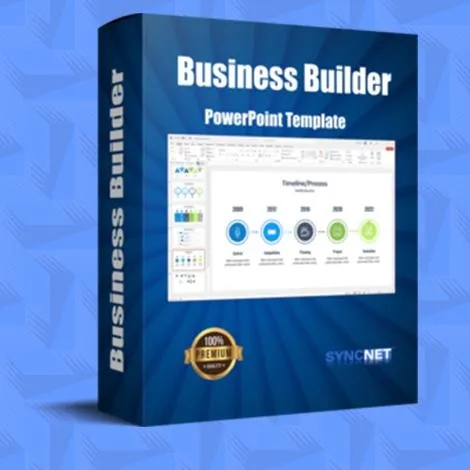
This PowerPoint template has every design you need to get your business start right. Use template to build presentations for investors, employees and even new clients. This template is delivered as a PowerPoint template and is easily modified to match your brand colors using the Free version of Office Online and any other software that can open PowerPoint files including Google Slides.
Top Software Tools for Solopreneurs to Run Their Business Online
Everything you need to manage your expert business at a high level to help you achieve your business goals are listed below. Check it out! We've done all the research and these are the tools we use!
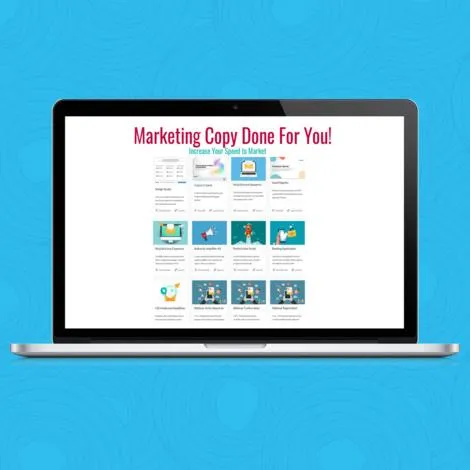
Marketing Copy, Scripts and Blog Posts Written for You!
Do you ever get stuck in front of a blank screen when you have to write your marketing copy? What if all you had to do is answer a few simple questions and let AI write your marketing copy for you. You have to check this out.
Software for Creating eBooks for the Web, Kindle, and all Digital Publishing
If you have a book in you or you simply want to publish a kindle book or even an eBook, this software is for you! It will format your book to fit the standard ebook sizes and allow you to create an amazing cover because we all know that we do "Judge a Book By Its Cover" ;~)
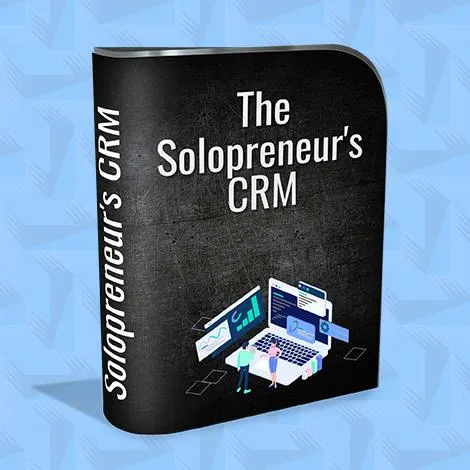
CRM Software that can run your entire business online
With no technical skills, you can build a website, build a marketing funnel, connect it to scheduling your calendar, accept payments, automate client onboarding and workflow, automated emails, texting and it can handle your phone calls. It's like having an extra Full-Time Employee (FTE) and get this, for a limited time you can get it all for a low one-time fee!
Ever wondered how they make product graphics? Even if you have no graphics skills or talent you can still create amazing product graphics for your business with simple to use software that's cheaper than photoshop and better than canva.
Latest News and Stories ...
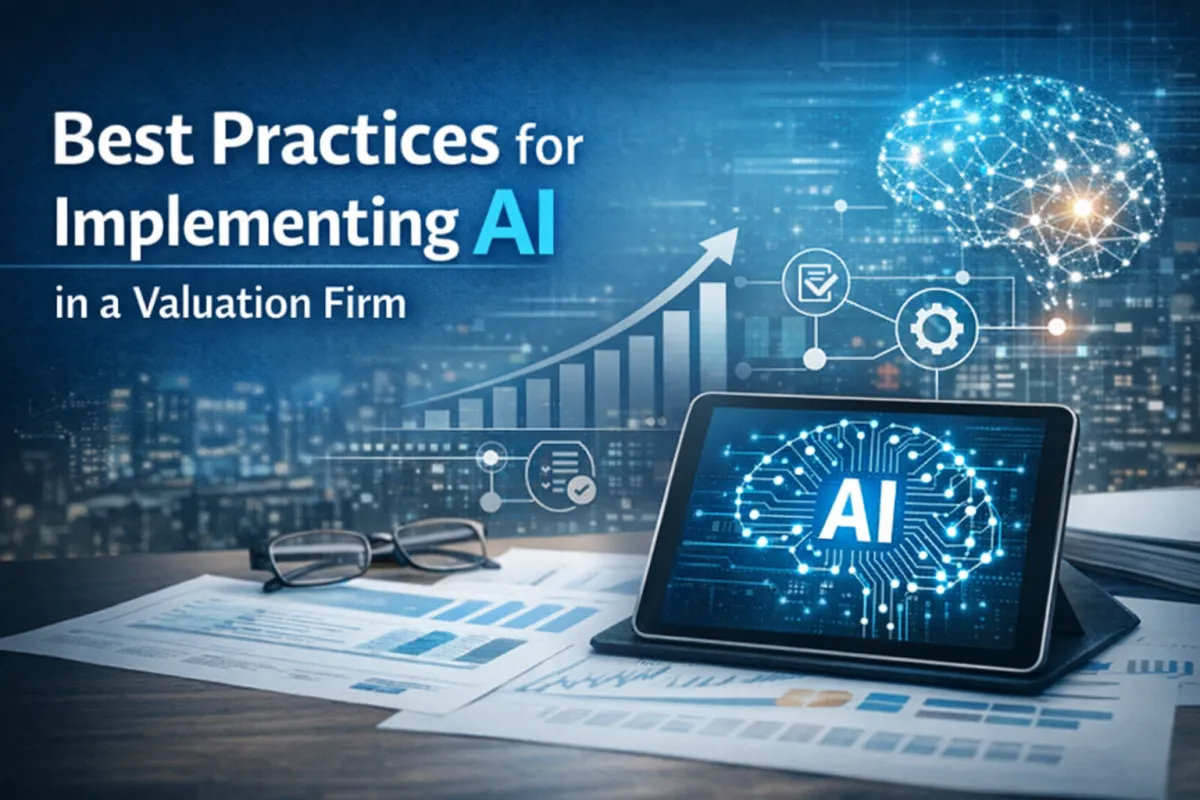
Best Practices for Implementing AI in a Valuation Firm
Best Practices for Implementing AI in a Valuation Firm
Today I’d like to talk a little bit about best practices for implementing AI into a valuation firm. Over the last few years, we’ve all heard a lot about AI—ChatGPT, Copilot, large language models, automation—and the conversation often jumps straight to tools. In my experience, that’s usually where firms go wrong.
Successful AI implementation isn’t about chasing the latest technology. It’s about building a practical, phased approach that aligns with how valuation firms actually operate, the standards they’re required to follow, and the risks they need to manage.
Let’s walk through what that looks like.
Start with Use Cases, Not Tools
One of the first best practices is to clearly define where AI can help inside the valuation workflow before selecting any technology. Valuation firms are document‑heavy, research‑intensive, and highly structured, which makes them well suited for certain AI use cases.
Good starting points include:
Research and document analysis
Drafting and summarizing narrative sections of reports
Internal knowledge retrieval
Client intake and qualification
Marketing and lead nurture activities
When you anchor AI to real business problems—saving time on research, improving consistency, reducing administrative friction—the technology decisions become much easier and far more defensible.
Build a Strong Foundation with Structured Knowledge
Another critical best practice is implementing a structured knowledge base before relying heavily on generative AI. Large language models are powerful, but they work best when they can reference your documents, methodologies, and historical work.
This is where retrieval augmented generation, or RAG, comes into play. RAG allows a language model to reference internal valuation documents, templates, training materials, and prior engagements to improve accuracy and relevance.
Instead of relying on general internet knowledge, you’re giving the AI controlled, firm‑specific context. That’s not only more accurate, it’s also a meaningful step toward better privacy and risk management.
Integrate AI into Existing Workflows
AI should support your existing valuation process, not replace it. A best practice I recommend is mapping AI capabilities directly into each stage of the engagement lifecycle.
For example:
During intake, voice or form‑based AI systems can help qualify prospects and gather preliminary information.
During research, AI can summarize large volumes of financial, industry, or economic data.
During report drafting, AI can assist with first drafts while the analyst retains full judgment and editorial control.
The key here is augmentation. The analyst remains responsible for conclusions, assumptions, and compliance with professional standards. AI simply reduces friction and administrative overhead.
Implement in Phases, Not All at Once
One of the biggest mistakes firms make is trying to “flip the switch” on AI everywhere at once. A phased deployment roadmap is a far better approach.
A typical progression might look like:
Internal productivity tools (research, summaries, drafting assistance)
Knowledge base and RAG implementation
Client‑facing systems such as intake or education
Marketing and lead generation automation
Each phase builds confidence, establishes governance, and allows the firm to address issues before expanding further.
Address Risk, Accuracy, and Governance Early
Valuation firms operate in regulated and litigious environments, so risk management must be part of the AI conversation from day one. Large language models can hallucinate, create confident‑sounding inaccuracies, or reflect bias if left unchecked.
Best practices here include:
Keeping humans in the loop for all final work product
Clearly documenting how AI is used internally
Restricting AI access to approved data sources
Training staff on proper prompting and review techniques
AI should be treated like a junior analyst: helpful, fast, and capable—but never unsupervised.
Focus on Long‑Term Capability, Not Short‑Term Hype
Finally, the most important best practice is mindset. Firms that succeed with AI view it as a long‑term capability, not a short‑term experiment. They invest in training, documentation, and internal standards. They revisit workflows regularly as models improve and regulations evolve.
AI is not a replacement for professional judgment, experience, or standards. But when implemented correctly, it can significantly enhance how valuation firms operate, scale, and serve their clients.
The firms that take a thoughtful, phased, and structured approach today will be far better positioned as AI becomes a standard part of professional services tomorrow.

Register For The VIP Club Now To Lock In
Charter Member Pricing For The Life Of Your Membership!
Free Membership
VIP Club
Annual Membership
Today Only $347
VIP Club
Monthly Membership
Today Only $37 / Month
Here's What Others Are Saying About Syncnet...
⭐️⭐️⭐️⭐️⭐️

I Went from 12 to 240+ Cakes in a Single Year
I was able to get around 12-14 wedding cakes a year with word of mouth, but Syncnet implemented an online marketing strategy that included upgrading my website and getting traffic to it and my business exploded 1200% in a single year. I now have steady clients and I can be booked out as far as 8 months! I couldn't handle any more business than I have now!
Joan B.
⭐️⭐️⭐️⭐️⭐️
More Than Doubled Our Landing Page Signups
Syncnet helped us take our webinar registrations and templatize a system to produce a large number of landing pages for all of our events and did it for such a low price. I'll never leave as a client. They know their stuff! It's a fantastic service!
Mark K.
⭐️⭐️⭐️⭐️⭐️
WE DID IT! We are an official Corporation!
Thank you again For The S-Corp template. We were able to file with the feds and state and now I have a legitimate corporation! It saved me at least $500 if I had used an attorney or maybe even more!
Jess M.
⭐️⭐️⭐️⭐️⭐️

Best Session of the Entire Conference...
Colin recently presented what I thought was the best conference session of the entire week at the NACVA/CTI Business Valuation & Financial Litigation Hybrid & Virtual Super Conference. I immediately put into place several of the action steps that he recommended during his session...
Michael D. Pakter, Forensic Accounting Expert
⭐️⭐️⭐️⭐️⭐️

Colin has a wealth of great information! He loves helping people succeed & exudes affable energy!
Janae Castell, CVA, MAFF
⭐️⭐️⭐️⭐️⭐️
Passive Income For The Win
Syncnet helped us sell over 500 copies of our audio clips. As a musician, we didn't have a clue as to how to sell online but Syncnet showed us the way and now we have passive income that has allowed us to set it up and forget about it.
Gerek A.
GoSolo.org is a web property of:
SYNCNET, INC.
1959 S 2580 E
St. George, UT 84790