
Want to Launch Your Passive Income Business as a Side Hustle in the next 90 Days?
The Tools, Training, and Systems to Launch and Grow Your Solopreneur Business!
Grab our FREE: "Business Startup Checklist" So You Can Avoid Making The Same Mistakes We Made!
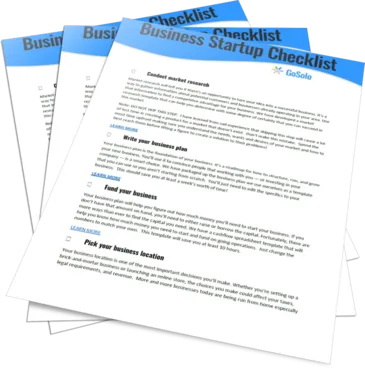
We'll Deliver Our Free "Business Startup Checklist" Immediately to Your Inbox
gosolo™ is committed to your privacy. We will occasionally send you free content and let you know about our offerings and you can unsubscribe at any time. We have never sold data and we never will. Your email address is safe with us.
Downloads To Help You Launch Your Solopreneur Business
These are just a few of the amazing solutions we have for solopreneurs, coaches, and consultants launching to a global market...

Business Plan Template
There has been a shift in branding in the last 10-15 years as personal brands have caught up with the importance of corporate branding. Building your personal brand has become more important than ever thanks to social media. If you want to stay relevant, then systematically organizing everything you do to build your personal brand will pay dividends in your bank account.

S-Corp Templates to Set up Your Corporate Structure
You'll get 3 S-Corporation Templates in Word Format so you can modify them to fit your needs. Each of the templates were used in the actual formation of subchapter S corporations. You'll also get a bonus sample Corporate By-Laws template

Cash Flow Expert Spreadsheet
Project, monitor, and manage your cash flow with our cash flow expert spreadsheet this is delivered as an Excel spreadsheet but it can be opened in Google Sheets and the Free Online version of Excel and any other software that can open Excel.
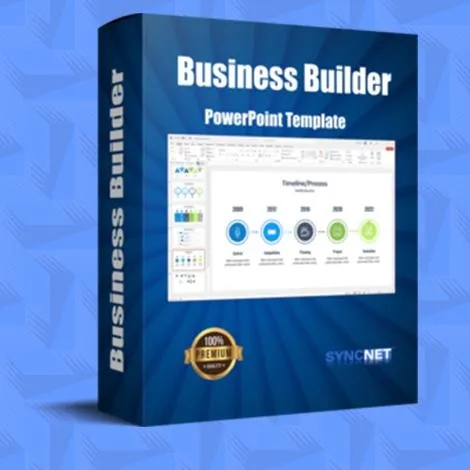
This PowerPoint template has every design you need to get your business start right. Use template to build presentations for investors, employees and even new clients. This template is delivered as a PowerPoint template and is easily modified to match your brand colors using the Free version of Office Online and any other software that can open PowerPoint files including Google Slides.
Top Software Tools for Solopreneurs to Run Their Business Online
Everything you need to manage your expert business at a high level to help you achieve your business goals are listed below. Check it out! We've done all the research and these are the tools we use!

Marketing Copy, Scripts and Blog Posts Written for You!
Do you ever get stuck in front of a blank screen when you have to write your marketing copy? What if all you had to do is answer a few simple questions and let AI write your marketing copy for you. You have to check this out.

Software for Creating eBooks for the Web, Kindle, and all Digital Publishing
If you have a book in you or you simply want to publish a kindle book or even an eBook, this software is for you! It will format your book to fit the standard ebook sizes and allow you to create an amazing cover because we all know that we do "Judge a Book By Its Cover" ;~)
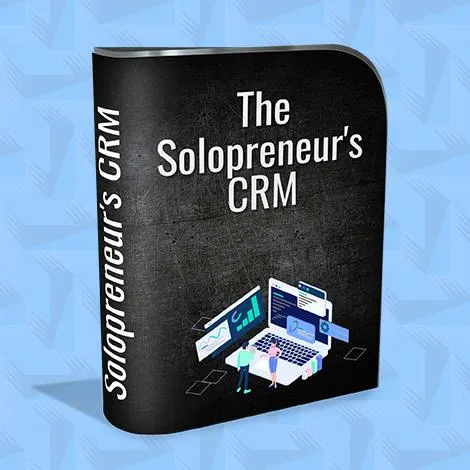
CRM Software that can run your entire business online
With no technical skills, you can build a website, build a marketing funnel, connect it to scheduling your calendar, accept payments, automate client onboarding and workflow, automated emails, texting and it can handle your phone calls. It's like having an extra Full-Time Employee (FTE) and get this, for a limited time you can get it all for a low one-time fee!
Ever wondered how they make product graphics? Even if you have no graphics skills or talent you can still create amazing product graphics for your business with simple to use software that's cheaper than photoshop and better than canva.
Latest News and Stories ...
I Tried OpenRouter Fusion So You Don’t Have To (But You’ll Want To Anyway)
I Tried OpenRouter Fusion So You Don’t Have To (But You’ll Want To Anyway)
If you’ve ever opened four different AI chats to answer one hard question and then played “LLM referee” in your head, you’re going to like this.
OpenRouter just shipped something called Fusion, and it basically turns that chaotic “ask five models, squint at the answers, and pray” workflow into a single API call with a built‑in judge model.
As someone who lives in the land of deep research, valuation models, and AI agent orchestration, this is the first time I’ve looked at an LLM product and thought, “Oh, this is compound AI for grown‑ups.”
What Fusion Actually Does
At a high level, Fusion takes your prompt and:
Fans it out to a panel of models in parallel (GPTs, Anthropic, Gemini, strong open models, etc.).
Let’s each of them use tools like web search and web fetch to go hunting for evidence.
Hands all those responses to a judge model that doesn’t just mash them together, it analyzes them.
The judge pulls out consensus points, contradictions, partial coverage, unique insights, and blind spots, then uses that structure to write the final answer.
From your side, it feels like… nothing special. Just send a request with model: "openrouter/fusion" and you get one response back. Under the hood, you’ve just run a small AI panel discussion.
Why Deep Research Needs This
Deep research is where single‑model heroics start to break down:
You need multiple perspectives: legal, financial, technical, product, user.
You need tool use: search, retrieval, maybe even bash or code execution.
You need consistency and grounding, not just pretty paragraphs.
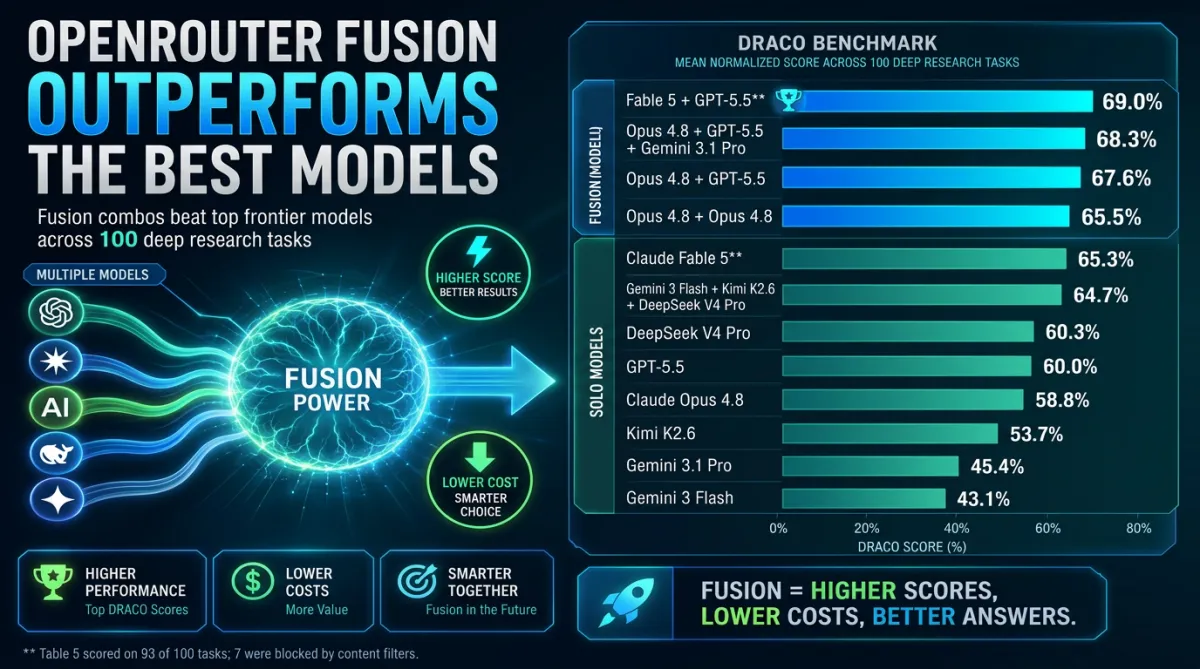
OpenRouter tested Fusion on DRACO, Perplexity’s deep research benchmark: 100 hard tasks across law, medicine, finance, technology, product comparison, and more.
The punchline from their reported numbers:
A panel of Fable 5 + GPT‑5.5, fused by a strong judge, scored around 69%.
Solo Fable 5 landed closer to 65.3%.
Across runs, panels consistently beat single models, including frontier models.
So, the claim is basically: Fable‑level deep research performance at roughly half the cost, if you’re willing to let a panel of cheaper or mixed models do the heavy lifting.
As an architect, that unlocks a very nice design space:
Use budget models for breadth and exploration.
Use a smart judge to enforce quality.
Keep the whole thing behind a single interface your app already understands.
The Counterintuitive Bit: Even Fusing One Model Helps
One of my favorite details from the Fusion test results: even fusing a model with itself works.
Example: run Opus 4.8 twice, take both reasoning paths, and have the judge synthesize. That setup reportedly jumped from around 58.8% solo to 65.5% fused—without model diversity.
That tells you something important:
The synthesis step is not a gimmick.
Different tool calls, different sources, different chains of reasoning—even with the same base model—can be combined into something better than any one run.
If you’re already running multiple “just to be safe” calls in your own stack, Fusion basically productizes that pattern.
How Fusion Fits Into a Real Stack
From a CTO / architect lens, here’s how I’d think about slotting Fusion into an existing AI setup:
1. As the “Deep Research Mode” Switch
Keep your normal fast model (Gemini Flash, GPT‑x Mini, etc.) for:
Short Q&A
UI helpers
Simple automations
Then route high‑stakes, high‑complexity questions to Fusion instead:
Investment memos, legal pre‑reads, product landscape comparisons
Multi‑source synthesis (documents + web + internal knowledge)
Anything where “oops” is expensive
Fusion’s default routing runs a panel of 1–8 models plus a judge, with tools enabled, behind that one slug.
2. As a Configurable “Compound Model” Primitive
OpenRouter exposes Fusion as:
A model alias: openrouter/fusion (just use it like any other model).
A server tool (openrouter:fusion), so your base model can decide when to invoke a panel.
A browser/chat interface, where you can configure a custom panel without writing code.
That means you can:
Start with the default panel for simplicity.
Graduate to a custom “Colin panel”: maybe Gemini Flash + DeepSeek V4 Pro + one weirdly good open model, with a strong Anthropic judge on top.
Cost: Why This Isn’t Just a Science Project
One of the big claims from OpenRouter’s own numbers: budget panels can beat single frontier models at about half the price.
For example:
A panel of Gemini 3 Flash + Kimi K2.6 + DeepSeek V4 Pro reportedly beat solo GPT‑5.5 and solo Opus 4.8 on DRACO, while landing within about 1% of Fable 5.
Cost came in at roughly 50% of a frontier‑model‑only setup for the same benchmark tasks.
If you’re running lots of deep research calls—say, in a research SaaS, RFP assistant, or internal strategy copilot—that cost delta is not academic. It’s the difference between “cool demo” and “we can afford to leave this on by default.”
Developer Experience: How You Actually Use It
From a dev point of view, the nice part is: there’s nothing exotic here.
API: Use the standard OpenAI‑compatible chat completions endpoint, set model to "openrouter/fusion" and send your usual messages array.
Tools: Models in the panel can call openrouter:web_search and openrouter:web_fetch, and in some setups even bash‑like tooling, so they can do real retrieval instead of hallucinating citations.
Config: Through docs and the UI, you can tweak which participant models are in the panel, how many to run, and which model acts as the judge/synthesizer.
If you’ve already wired apps to OpenRouter (or any OpenAI‑style endpoint), Fusion is more of a routing decision than a whole new integration.
Where I’d Use Fusion First
If I were rolling this into client projects or my own tools, here are the first places I’d test it:
Valuation and deal memos
Let a panel battle it out on comps, narratives, risks, and scenario framing, instead of trusting one model’s first draft.Competitive landscapes & product comparisons
Fusion is built for “what’s actually different here?” and “who’s saying what in the wild?” style questions.Policy, legal, and compliance pre‑research
Not as a lawyer replacement, but as a better “first pass” before a human review, especially when you want to see conflicting interpretations surfaced, not hidden.Knowledge‑heavy agent chains
Use Fusion as the “oracle step” for especially gnarly hops in a multi‑agent workflow, instead of chaining 12 calls to one model that might drift.
So… Should You Care?
If your stack mostly does simple chatbots, you may not need Fusion right away. A single high‑end model is already overkill for FAQ‑style tasks.
But if you:
Live in deep research,
Care about source‑grounded reasoning,
And you’re tired of playing manual “which model do I trust?” every day,
then Fusion is absolutely worth experimenting with. It’s one of the first mainstream products that treats multi‑model, judge‑style synthesis as a first‑class primitive instead of a DIY hack on top of five different APIs.
And the best part for builders like us: from the outside, it still looks like “just another model.” That’s exactly the kind of complexity I like—hidden behind a clean interface, where I can flip it on in one place and watch the rest of the system quietly get smarter.

Register For The VIP Club Now To Lock In
Charter Member Pricing For The Life Of Your Membership!
Free Membership
VIP Club
Annual Membership
Today Only $347
VIP Club
Monthly Membership
Today Only $37 / Month
Here's What Others Are Saying About Syncnet...
⭐️⭐️⭐️⭐️⭐️

I Went from 12 to 240+ Cakes in a Single Year
I was able to get around 12-14 wedding cakes a year with word of mouth, but Syncnet implemented an online marketing strategy that included upgrading my website and getting traffic to it and my business exploded 1200% in a single year. I now have steady clients and I can be booked out as far as 8 months! I couldn't handle any more business than I have now!
Joan B.
⭐️⭐️⭐️⭐️⭐️
More Than Doubled Our Landing Page Signups
Syncnet helped us take our webinar registrations and templatize a system to produce a large number of landing pages for all of our events and did it for such a low price. I'll never leave as a client. They know their stuff! It's a fantastic service!
Mark K.
⭐️⭐️⭐️⭐️⭐️
WE DID IT! We are an official Corporation!
Thank you again For The S-Corp template. We were able to file with the feds and state and now I have a legitimate corporation! It saved me at least $500 if I had used an attorney or maybe even more!
Jess M.
⭐️⭐️⭐️⭐️⭐️

Best Session of the Entire Conference...
Colin recently presented what I thought was the best conference session of the entire week at the NACVA/CTI Business Valuation & Financial Litigation Hybrid & Virtual Super Conference. I immediately put into place several of the action steps that he recommended during his session...
Michael D. Pakter, Forensic Accounting Expert
⭐️⭐️⭐️⭐️⭐️

Colin has a wealth of great information! He loves helping people succeed & exudes affable energy!
Janae Castell, CVA, MAFF
⭐️⭐️⭐️⭐️⭐️
Passive Income For The Win
Syncnet helped us sell over 500 copies of our audio clips. As a musician, we didn't have a clue as to how to sell online but Syncnet showed us the way and now we have passive income that has allowed us to set it up and forget about it.
Gerek A.
GoSolo.org is a web property of:
SYNCNET, INC.
1959 S 2580 E
St. George, UT 84790